Architectural plans: stages, drawings and cost of a complete set
An architectural plan is not just a layout drawing. It is a decision document that organises surfaces, circulation, views, heights, structure, openings and the material intentions of the project. For a house or a villa, the plans must make the place legible before construction even starts.
The set evolves in stages: sketch, preliminary design, detailed drawings, technical coordination, then the documents needed for tenders or for the building site. This progression avoids freezing decisions too early, while they still need to be tested.
What a good plan must clarify
- The siting on the land and the orientation of the main rooms.
- The relationship between interior, terraces, garden, patio or pool.
- Usable surfaces and circulation without wasted space.
- Technical zones, storage, service access and site constraints.
What a complete set of drawings contains
A complete set is not limited to floor plans. Depending on the phase and the purpose of the file, it brings together:
- The location plan and site plan: the land, its boundaries, its accesses and the building’s footprint.
- Floor plans: layout, surfaces and dimensions of every level.
- Sections: heights, levels, the relationship between interior and exterior volumes.
- Elevations: composition, openings, materials and solar protection.
- Technical drawings: structure, plumbing, electricity, air conditioning — coordinated with the engineering offices.
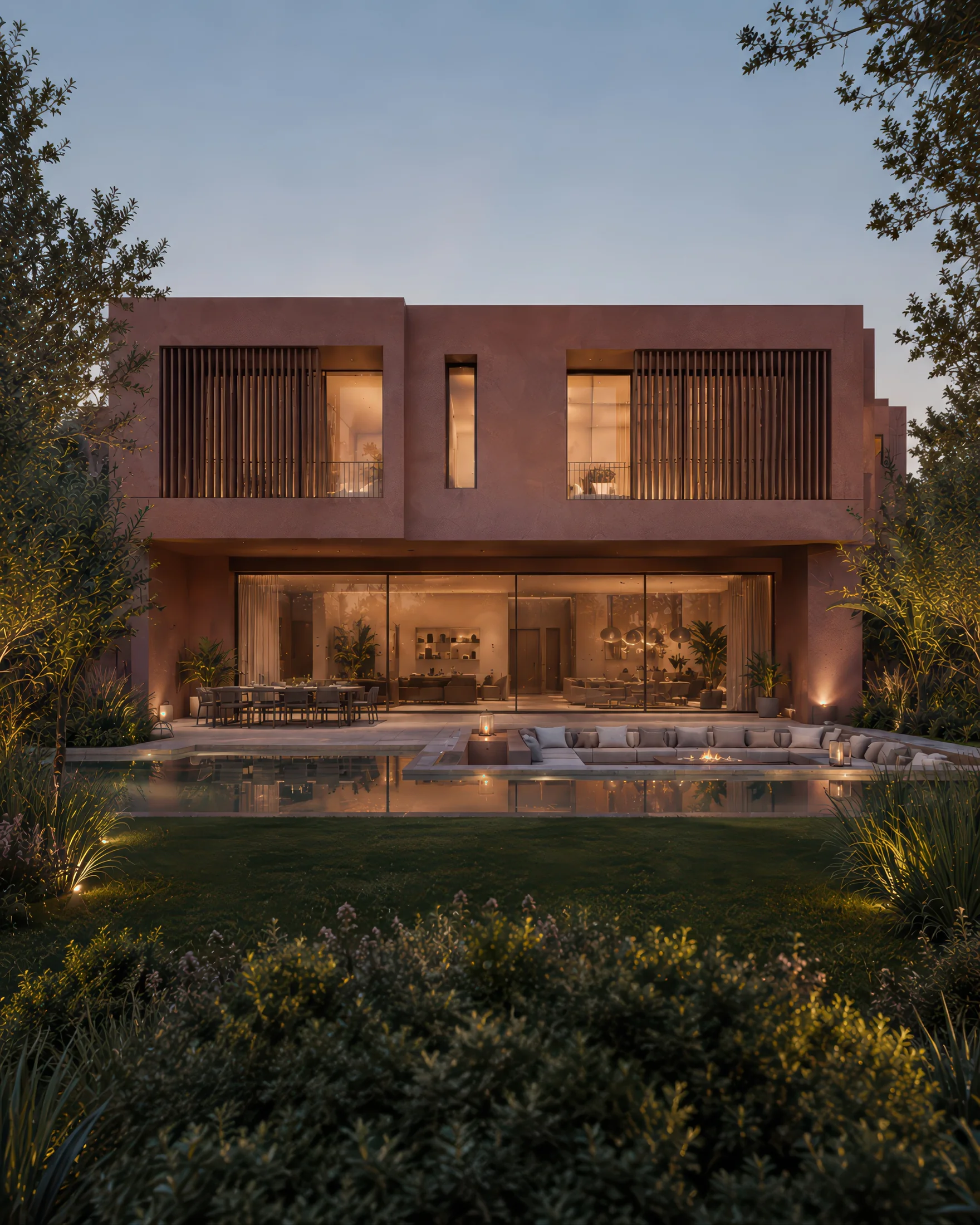
- 3D views: to validate volumes and light before building.
From sketch to construction drawings: the stages
The sketch sets the big intentions: siting, volumes, overall layout. The preliminary design refines and prices them: final surfaces, envisaged materials, first estimates. That is where the real trade-offs are made.
Then comes the building-permit file — the regulatory documents the commune requires — and, for the site, the construction drawings: the level of detail that lets contractors price accurately and build without improvising. A rigorous construction set is the best insurance against change orders.
Plans for a building permit in Marrakech
The permit file submitted to the commune must be drawn up and signed by an Order-registered architect, accompanied where required by technical studies (structure in particular). Requirements vary by zone — new town, villa zones, the listed medina — and the review can take from a few weeks to a few months.
One more reason to entrust plans and permit to the same team: revisions requested by the commune are handled quickly, without bouncing the project from one party to another.
How much do architectural plans cost?
It all depends on the scope. Plans alone — sketch and preliminary design to frame a project — can be quoted as a fixed fee. A complete file up to the permit is an intermediate mission. And when the mission runs from design through site supervision, the most common reference is a fee of 10% to 15% of the works value, of which the plans are one component.
Comparing plan prices only makes sense at equal scope: a "cheap" plan without sections, details or technical coordination is paid for later, on site.
Reviewing your plans: the classic traps
Before approving a set of drawings, always check:
- Surfaces: distinguish usable areas, gross areas and footprints — not all "m²" on a plan are equivalent.
- Orientation: the sun’s path, prevailing winds, views and overlooking — in Marrakech, a badly oriented terrace is unusable six months a year.
- Heights and technical reservations: air conditioning, ducts, storage — invisible on a layout plan, expensive to fix later.
- Consistency between plans, sections and elevations: every change must appear everywhere.
- Ask for the 3D views: they reveal what plans cannot show.
The cost of architectural plans for a house depends on the level of detail expected, the surface area, the administrative steps to include and the follow-up requested after design.
Keep reading
- The building permit in Marrakech
- Designing and building a villa in Marrakech
- Understanding architect fees